
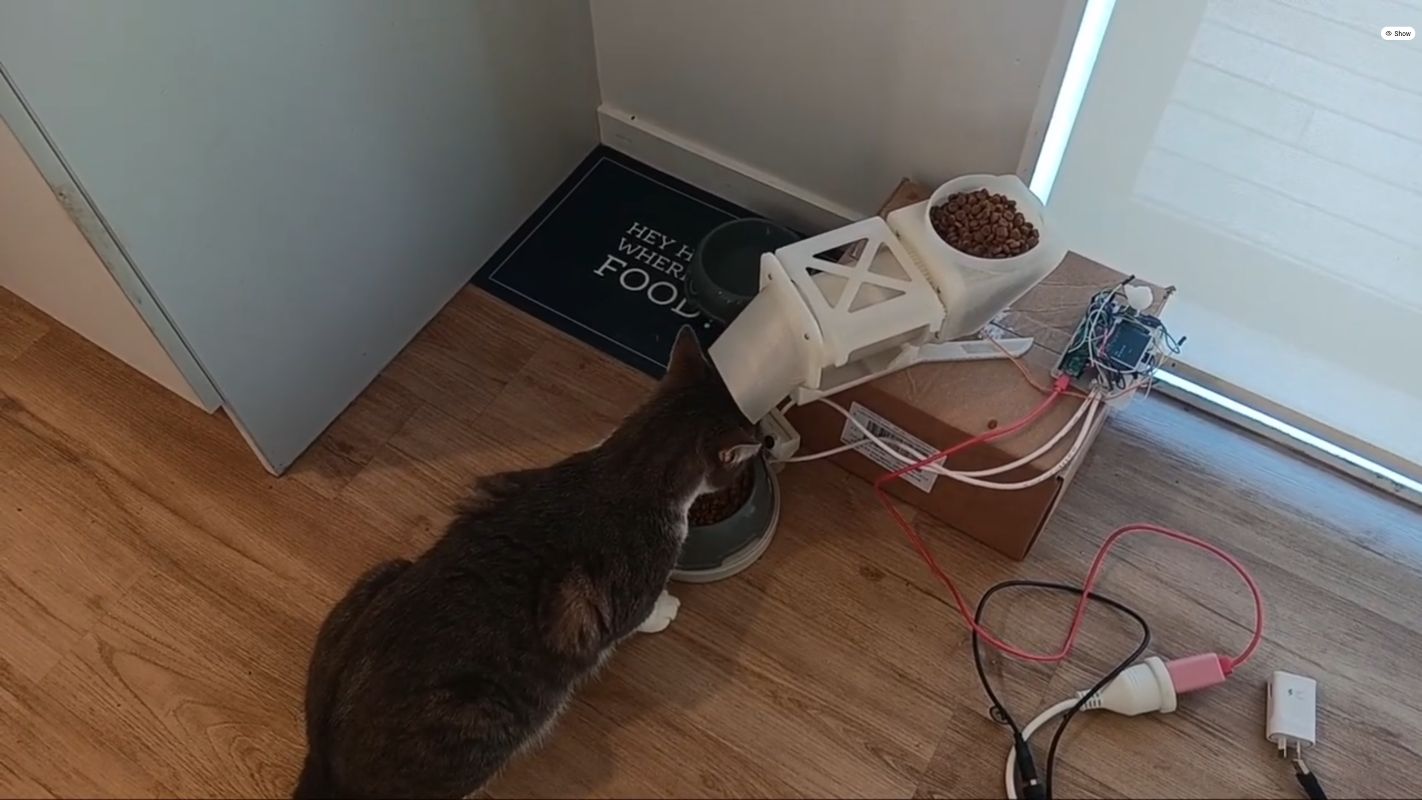
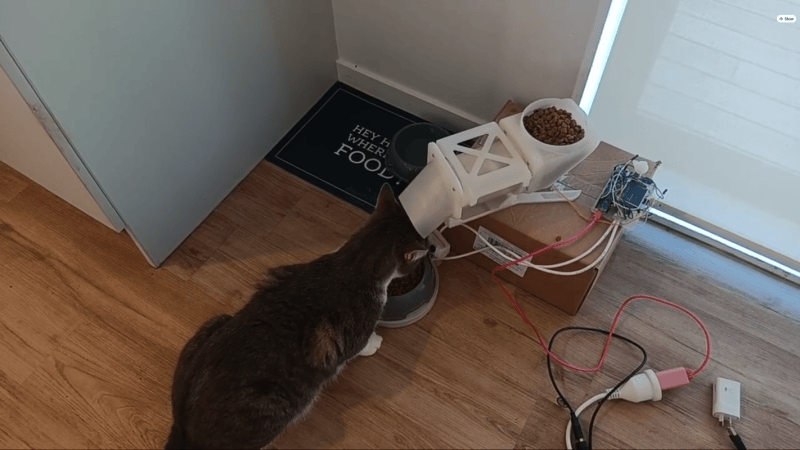
Automatic cat feeders are a dime a dozen, largely because this is an easy problem to solve. Dry cat food is easy for machines to manipulate, and the electronics needed to accomplish the task to a bare minimum are plentiful and inexpensive. But just doling out food is only easy part of the problem. [Jason] wanted to make sure that his cats actually ate once the food was dispensed so he added a few extra features to this cat feeder.
The main addition to this feeder compared to off-the-shelf models is a weight sensor under the bowl. The feeder metes out a certain amount of food, and then a Raspberry Pi Pico W keeps an eye on the weight of the dish. If it goes down, presumably the cat has eaten all of the food. But just to be sure, an ultrasonic sensor was added beside the bowl to ensure something cat-shaped was there at the same time. There was some issue with this sensor blasting out noise in a cat’s audible range at first, but it seems like that problem has since been solved as well.
The build has a few other perks as well. The hardware has wireless communication ability, so it’s easy to keep an eye on when out and about. It can log data and is much more programmable than others. Like most cat feeders, though, it’ll only work for dry food. For automatically feeding wet food something like this robotic feeder that opens cans and dispenses them at set intervals would be needed.


